
LaGrange Court Docket Searches
MyCase is Indiana's free public Case Search. It's the natural first stop for a LaGrange County court docket. Pick Name when you lack a case number. Pick Case when you have a cause number or citation. From there, choose LaGrange County and narrow by status, filing dates, and category. A prefix tells you the court: 44C01 means Circuit Court and 44D01 means Superior Court. Keep the leading zeroes and hyphens, since they cut down mistaken matches.
- Open MyCase and select Case, Name, or Attorney.
- Choose LaGrange County and add only known filters.
- Open the result and verify court, type, file date, and status.
- Read the newest events and any future setting.
- If no match appears, remove filters and call the Clerk.
No account is needed for MyCase most of the time. A name search takes a last name, optional given names, and a birth-date range. Business names go in the Business field. You cannot combine a wildcard with a sounds-like search. Results can be capped, so the court and date filters earn their keep. Phone and counter routes matter just as much. Call the Clerk at (260) 499-6371. Visit 105 N Detroit Street, or ask for a plain or certified copy. Circuit answers at (260) 499-6358, and Superior answers at (260) 499-6363. A mail request should spell out the court, the case number, and the document. Include the copy type and a way to reach you.
LaGrange Has No Town Court
LaGrange is the county seat, yet that gives it no municipal court. The current Indiana Rule 8 court list names only two judicial bodies. The Court Calendar agrees: LaGrange Circuit and LaGrange Superior. Neither shows a separate LaGrange town-court node. This matters because it prevents a common docket search error. A town ordinance may create a local rule. But an alleged violation lands in Superior Court as a county judicial case.
Quick answer: Search LaGrange traffic and ordinance cases under LaGrange Superior Court. Use Town Hall for ordinance text, not the case docket.
Superior Court takes every county infraction and ordinance matter under local rules. Title 9 traffic-related criminal counts land there too. Other criminal cases may be split between Circuit and Superior. Probate and juvenile categories belong to Circuit. Assignment rules and case type tell you which court holds the record. The incident address alone does not.
Inside the LaGrange Municipal Court
No LaGrange Municipal Court exists. The judicial work sits with LaGrange Circuit Court and LaGrange Superior Court. Both are housed at the county courthouse, with elected Clerk Kimberley Johnson keeping the records. Circuit handles estates, guardianships, trusts, juvenile matters, and reciprocal support. Whatever civil or criminal cases are assigned to it land there too. Superior takes every infraction and ordinance case. It also takes all small claims and evictions, plus its other assigned matters. The Clerk holds the files, Case Summary information, filings, judgments, and court-cost accounting. MyCase helps, but it is not the official record. A public case can appear while one of its documents stays offline. Older files may not be digitized at all. When you need a certified judgment, a complete filing, or a historical record, ask the Clerk. The Clerk can say which route and copy type fit. A party account can surface documents open to that party, though confidentiality rules still apply.
LaGrange Court Context by Numbers
The 2020 Census incorporated-place table puts 2,715 residents in LaGrange, the largest of the county's four incorporated towns. None of that controls jurisdiction. It does explain why town, county, and court offices crowd together in search results, and why readers often expect a distinct LaGrange court that does not exist.
Town administration sits at 1201 N Townline Road. The courts and the Clerk sit at 105 N Detroit Street. Different buildings, different records. Town Hall keeps meetings, utilities, and ordinances, while the courthouse keeps judicial cases. One office cannot certify the other's file.
Finding LaGrange Court Dates
An upcoming LaGrange setting may show up in MyCase events. It can also appear in Indiana's separate Court Calendar. Choose LaGrange County, then Circuit or Superior. Participation in the calendar is voluntary, and the visible date window is limited. A missing listing never cancels a hearing. Check the latest event against the calendar and any written notice. Call the assigned court when a date is close.
| Date | The scheduled day, subject to a later order. |
|---|---|
| Time | The hearing time, which may differ from docket call. |
| Location | The room or place stated by the court. |
| Judge | The judicial officer assigned to the setting. |
| Setting Type | Initial hearing, pretrial, status, motion, or trial. |
Read docket entries in order. "Notice of setting," "hearing held," "continued," and "reset" do not mean the same thing, and the newest order usually controls. Administrative Rule 9 adds a safeguard: daily calendars or dockets must be available electronically or in another form with case number, caption, date, time, and location.
LaGrange Town Records Differ
The official LaGrange town page serves municipal government well. But it is not a judicial search. Town material can point you to an ordinance, a meeting, a utility office, or a contact. Court events such as filings, settings, pleas, and judgments live in the county system instead. The town page simply illustrates that administrative channel.
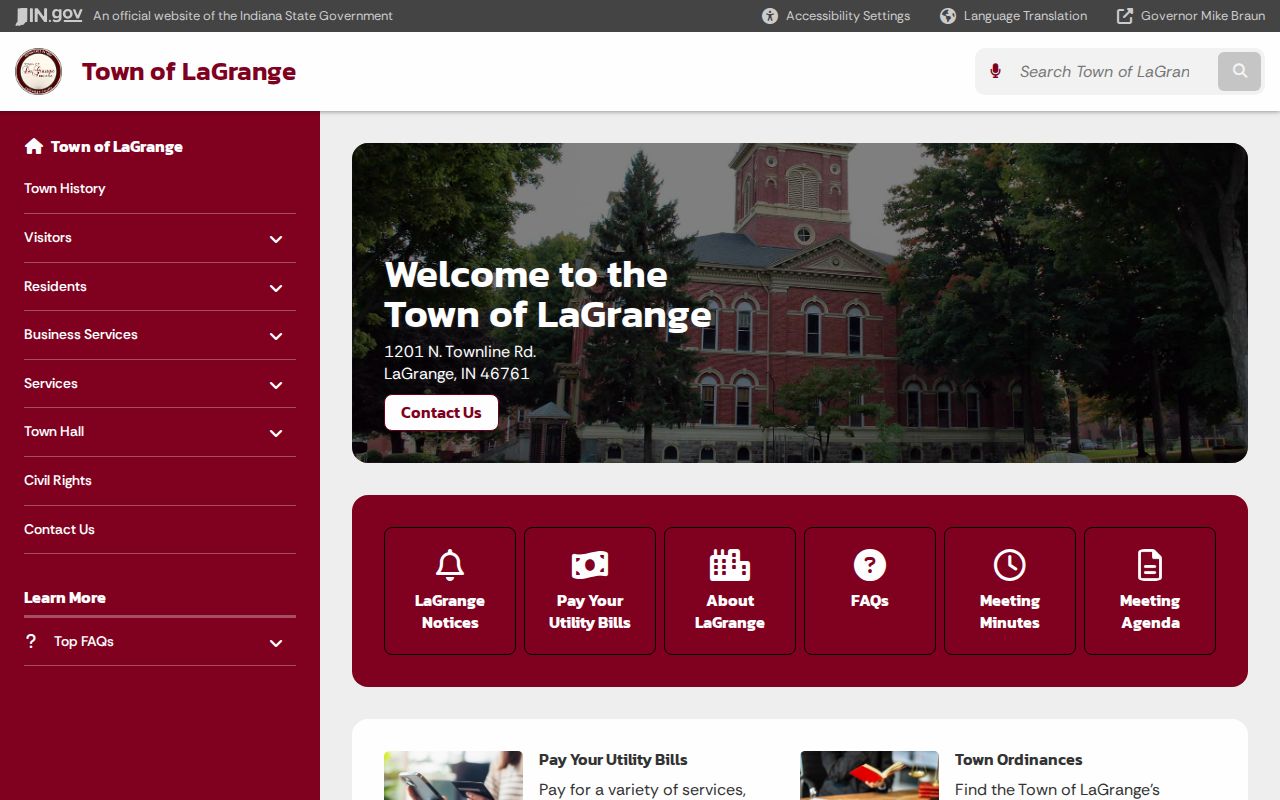
Need an ordinance or meeting record? Call Town Hall at (260) 463-3241. For a charge, setting, disposition, or certified filing, use MyCase or the county Clerk. If you need both, ask each office for its own records.
LaGrange Traffic Ticket Lookups
Traffic tickets in LaGrange County land in Superior Court. The statewide traffic portal takes three ways in. You can use a Ticket (UTT) number, a driver's-license number, or a name paired with a date of birth. Look up first. A match can list the agency, the court, the case number, the charged offenses, and whatever options you are eligible for. Coverage is not complete, though. Some LaGrange tickets never show up there, and not every one can be paid online.
Checking costs you nothing. Paying is different. An online plea or payment can waive your trial and become a disposition. The ticket itself, or the mailed notice, sets the real due date and the steps for contesting the charge. If a search comes back empty, call the Prosecutor's Ticket Clerk at (260) 499-6326, or ask at Superior or the Clerk's office. For the wider record route, the county traffic court page lays it out.
Reading a LaGrange Case Summary
In MyCase, the detail view is called a Case Summary, and that is your window onto the LaGrange County court docket for a case. Read the header first. It should confirm the court, the filing date, the case type, the status, and the style of the case. From there, work through the roles, counsel, cross references, events, settings, and any documents the court has made available.
- Case event
- A filing, hearing, order, or disposition row.
- Converted event
- An entry moved from an earlier system, not always a new filing.
- Case status
- An Open or Closed portal label, not a ruling by itself.
- Disposition
- A recorded outcome that should be read with its order.
Keep expectations in order. A docket is not a transcript, the financial values can lag behind what the Clerk shows, and remote document access varies by case type. For the authoritative file and the current balance, the Clerk's record controls.
How LaGrange Cases Reach the County
No city court sits above these cases on appeal. Whatever happens locally, a case enters the right LaGrange County trial court at the moment of filing. Infractions, ordinance matters, small claims, evictions, and traffic counts usually begin in Superior, while probate and juvenile cases start in Circuit. Anything else follows the local allocation rules.
Docket flow: LaGrange town matter › LaGrange County Clerk › LaGrange Circuit Court or LaGrange Superior Court
Federal matters belong to the Northern District of Indiana and run through PACER. State appeals climb to Indiana's appellate courts, but the county case summary stays with its original cause number. The county docket overview walks through how the two-court structure works.
LaGrange Population Source
The official Census table supplies the population vintage used here.
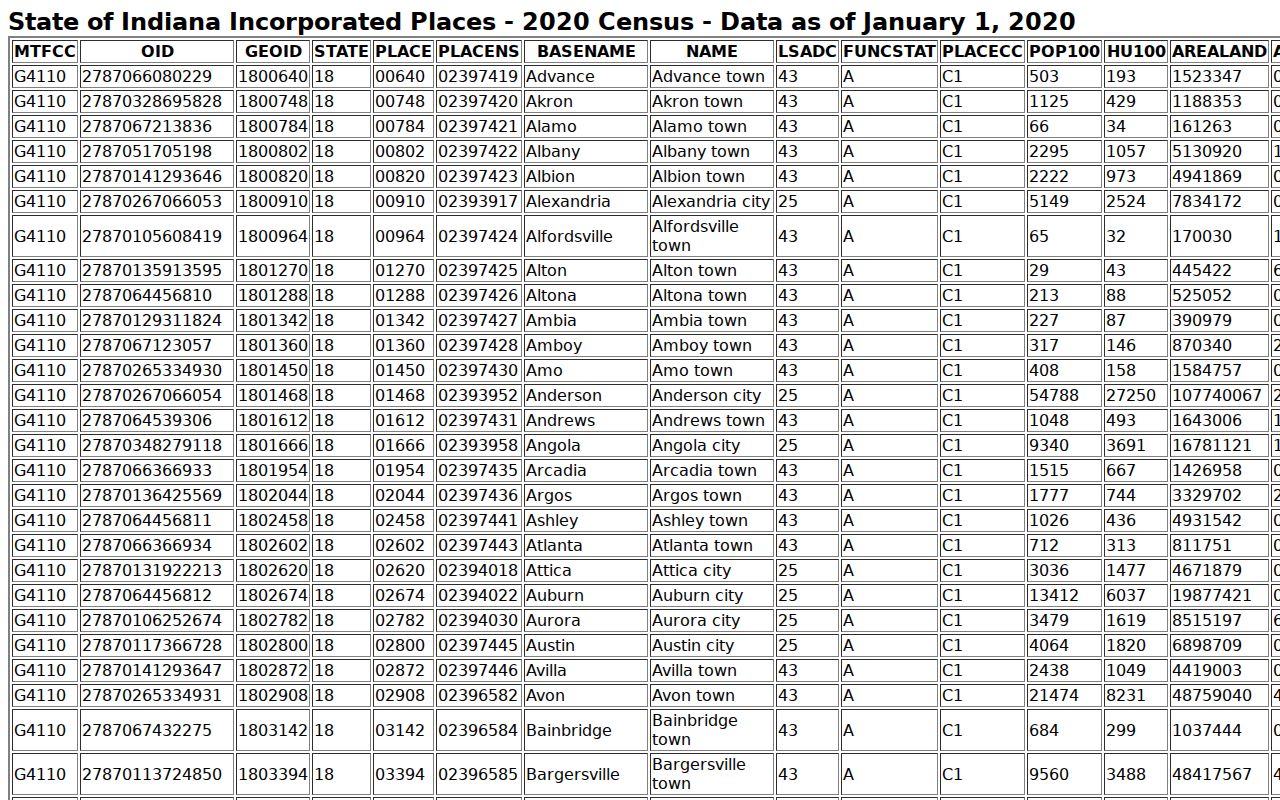
A population figure adds context only. It proves nothing about any case. Jurisdiction over LaGrange County courts comes from Indiana law and local allocation rules, so keep demographic facts and docket facts separate and the numbers stay honest.
Who Can See LaGrange Court Records
Indiana starts from the presumption that court records are open. Redaction, sealing, expungement, and court orders can narrow what anyone sees. Records at a public terminal or the counter may go beyond what is online. Confidential details do not become public. A courthouse visit does not change that. A search can return nothing. The cause could be a wrong case-number prefix, an older file, a restricted category, expungement, sealing, or a simple search error.
Key rules:
Indiana Administrative Rule 9 addresses calendars, remote access, and bulk data.
Indiana Access to Court Records Rule 5 identifies records excluded from public access.
Sensitive identifiers must be redacted. Sealed material cannot be retrieved by changing a search.
Call or visit the Clerk and simply ask what lawful access exists. A phone call or letter can start a request. The counter handles inspection plus copy arrangements. Have the case number, the court, the item you want, and the copy type ready. Bring your contact details too. Always check a Case Summary against the official file before relying on it.
LaGrange Clerk Access Fallback
Online tools can fall short. When they do, the Clerk is the practical fallback for any LaGrange County record question. Staff work fastest with a case number. Give them the court prefix too. Also give the specific filing, and say whether you need a plain or certified copy. A phone call can confirm where a request should go. Counter inspection covers material that is public but unavailable remotely. Mail suits a narrow request best, provided you include return details. Older LaGrange files that never entered the online system often need this route.
Remember that the judicial record belongs to the court, not the town office. The maintaining office can also quote current copy costs and payment instructions. That beats trusting a stale online balance.